
Legal problems are acting as a brake on growth for thousands of small businesses across England and Wales.
That is according to new research published today by the Legal Services Board (LSB), with business groups backing calls for action to help firms access the support they need.
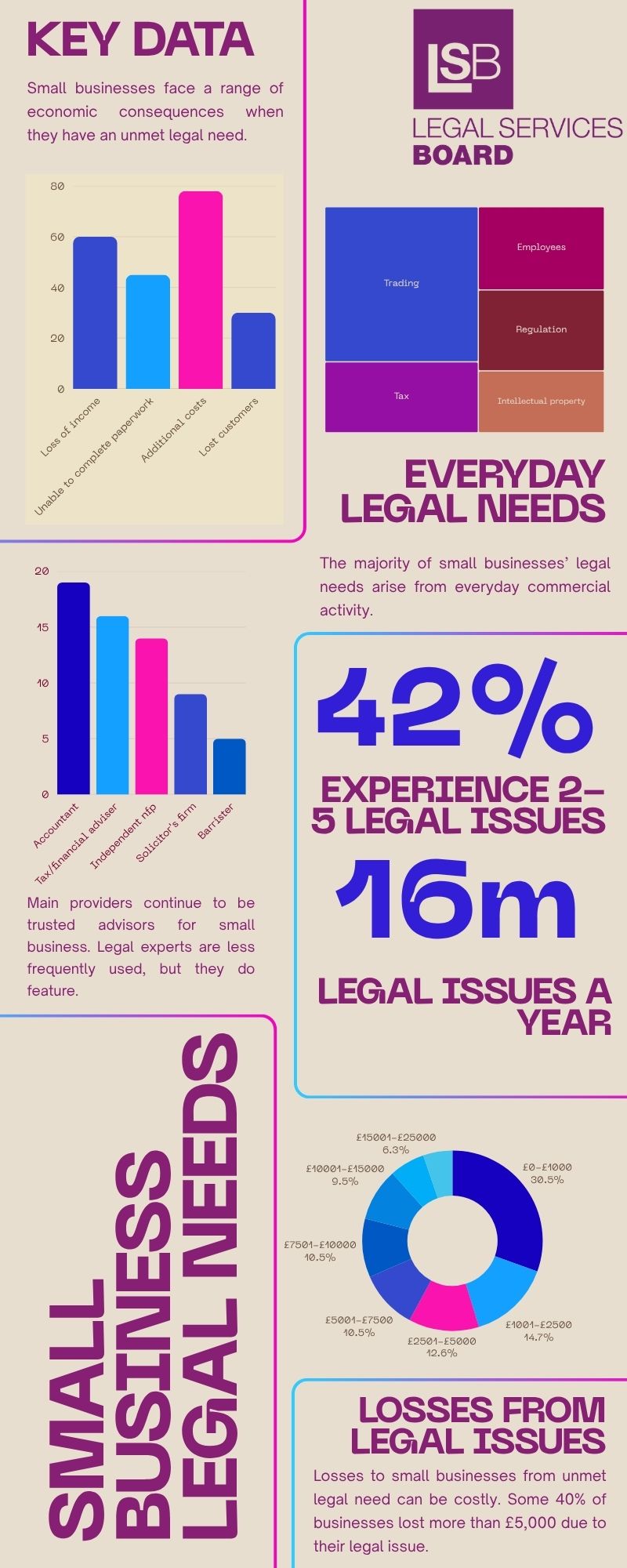
The Small Business Legal Needs Survey, based on responses from more than 10,000 small businesses, found that more than a third (36%) experienced at least one legal issue during the previous year. Businesses facing legal problems reported an average of 2.8 issues each, which suggests they collectively experience around 16 million legal issues annually across England and Wales.
Nearly one in five businesses reported that legal issues had prevented or delayed investment in innovation and growth.
The financial impact was also substantial: four in ten legal issues resulted in costs exceeding £5,000, while one in ten resulted in costs exceeding £15,000.
The findings suggest that legal problems are not simply a legal concern. They affect growth, productivity and business resilience, particularly for smaller businesses with limited time and resources.
Richard Orpin, Chief Executive of the Legal Services Board, said:
“Small businesses are the backbone of the economy, yet too many are losing time, money and opportunities because legal problems are not identified early enough or resolved effectively.
“Our findings show that legal problems are business problems. They can hold back growth, delay investment and prevent businesses from reaching their full potential.
“Small businesses are important consumers of legal services, but too many still struggle to find the right help when they need it.
“We are encouraged that business organisations share these concerns. Helping businesses resolve problems earlier and access the support they need is not simply about improving legal services. It is about unlocking growth, improving resilience and helping businesses focus on what they do best.”
Late payment continues to hold back growth
The survey found that issues arising from day-to-day commercial activity, including late payments and disputes over the delivery of goods and services, were among the most common legal problems faced by small businesses.
Late payment was identified as one of the most damaging issues:
- 35% of affected businesses spent significant time and resources chasing payment.
- 28% experienced difficulties paying their own bills as a result.
Emma Jones CBE, Small Business Commissioner, said:
“At the Office of the Small Business Commissioner (OSBC) we are on a mission to make life easier for small firms by getting money moving faster through the economy. Our aim is to reduce hours spent chasing debt and have those hours instead focused on more productive activities that deliver growth.
The results of the Small Business Legal Needs Survey show further evidence of the importance of tackling poor payment practices. That is why I am pleased the Government is taking the Commercial Payments Bill through Parliament to support small businesses to be paid quickly, without delay.
At the OSBC we will continue to deliver for small businesses by working with business of all sizes to improve their payment practices.”
Businesses that know where to get help achieve better outcomes
The survey found that businesses with greater confidence in identifying legal problems and knowing where to seek support were more likely to achieve positive outcomes.
However, many businesses continued to struggle to identify appropriate sources of help or delayed seeking support until problems became more serious.
Accountants and tax advisers remained the most common source of advice on legal problems, ahead of solicitors and barristers, highlighting the importance of trusted intermediaries and referral networks.
Businesses are also using technology to find legal information and support providers.
Tina McKenzie, National Chair, Federation of Small Businesses (FSB) said:
“Small firms find legal issues extremely intimidating, and very often lack the resources needed to navigate the legal system with confidence.
“The toll in terms of time and money taken up by legal problems is enough on its own, even before adding in the stress and anxiety arising from uncertainty and worry over potential outcomes. FSB sees this as a major problem and that’s why we now provide free 24/7 legal advice to all our members.
“More widely, making the legal system more responsive to small firms’ needs will free up huge amounts of time, money, and mental energy for small businesses to invest in their own growth and development.”
David Bharier, Deputy Director, British Chambers of Commerce, said:
“The cost burden facing SMEs has grown substantially in the last decade, and that matters when our data shows just 17% of firms are planning to increase investment.
“As this report shows, legal disputes and late payments add to that burden. With further obligations on the way, it is essential that policy is designed to support investment rather than constrain it.”
LSB calls for action
Based on the findings, the LSB is reaching out to government, legal services regulators, business support organisations, lawyers and law firms for help to:
- Focus on addressing legal problems that have the greatest impact on economic growth, particularly late payments.
- Help small businesses recognise legal problems early and find appropriate support, as part of wider business support services.
- Make legal advice and services easier to find and access through technology and improved signposting.
The Executive Report is available on the LSB website.